LP: Did you have a preference, law enforcement or public safety realm?
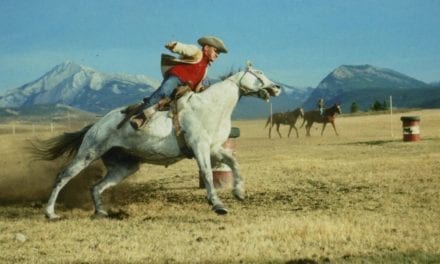
TW: I was always kind of most interested and worked mostly in public safety. I was moderately interested in law enforcement, but I kind of like doing everything. With public safety you get to ski, climb, do rescues and teach courses and that was a lot of fun. Whereas in the law enforcement program they mainly have firearms and defensive tactics instructors. I wasn’t interested in any of that. The things I liked doing, and was the best at were skiing, climbing, hiking, dealing with people, that sort of stuff. I worked for a year as a backcountry warden in Jasper with horses and that was, for me, the hardest thing. Horses and I don’t get along. I’m not like guys like Brian (Spreadbury), I’m not a cowboy. Back then, when I moved to Elk Island, I worked with a bunch of cowboys and they said, ‘here, get on this horse, let’s go. Hang on.’ Now if you’re going to ride horses in the backcountry, you need the Parks Canada course.
LP: Do you have any stories from your time working with horses?
TW: The first backcountry horse trip I did in Jasper, the second day I got head butted by a horse and got two black eyes and was knocked off my horse by another horse that got spooked. I always found horses stressful. They’re OK, they have their place and I like em’, but it was never fun.
LP: How did the different parks you worked in compare? Do you have a favourite?
TW: For sure, if we go back to Elk Island, I thought I was going to hate it. It’s a tiny little park, it’s an island, totally fenced in. But I always liked wildlife, so it was like, ’oh, this is actually going to be pretty interesting.’ Our first week there we were chasing (on horseback) and catching elk calves. We used to chase bison around on horses and so I really got a keen, upfront close experience working with wildlife which I’d never had before. Most of the wardens were old cowboys, so you really got to learn and understand the old cowboy culture. Cowboys were the guys who started as wardens. They started the whole warden service. My first supervisor was a guy called Fred Dixon and his wife Ann, they were historical people in the warden service and everyone knows Ann from the olden days, the “Silent Partners” book and involvement with the warden service. So, that was really interesting. Then Jasper was my first exposure to a big park where everything happens. There’s always stuff going on. So, lots of rescues, lots of campground parties, you had to take care of wildlife. Then the big backcountry, Jasper is the big backcountry park out West. In Jasper in the early 1980s, we would work 17 days in a row in the backcountry and get four off. They would set it up so you’d work 10 days on and get four off, but they’d give you a day off in the bush which was never a day off. You still had to feed the horses, you still had to do all that stuff and then they paid you an overtime day. Because the Jasper backcountry was so big, it was hard to get anywhere unless you stayed out there a long time. They don’t do that anymore. HR wouldn’t let you do that anymore. These days you would never get away with giving someone a day off in the backcountry.
So, that was the big park. Then, when I went to Yoho, it was a little park. Again, you got to do everything, but you weren’t as busy. But when I was in Yoho Park, I had a budget, I supervised a couple people, so you did everything but on a much smaller scale. If something big happened, the bigger parks, guys from Lake Louise and Banff, would come over to help you.
LP: Did you have any other main duties/responsibilities over the years?
TW: I think the only thing I haven’t talked about is when I came back to Lake Louise. I came back as what they call a coordinator position. I was one level down from the manager for the general operational wardens – there were still largely generalist wardens then. But I was really hands-on supervisory. I had direct supervisory for about 10 or 12 wardens, so it was really challenging being a supervisor for all those men and women. Some had lots of experience; guys like Spreadbury were pretty easy to supervise. But a lot of them were brand new and never worked for parks before. They didn’t have any field experience, so that was pretty challenging, but it was fun. I liked that aspect of it. Then, when I went over to the law program and I was running — enforcement detachments, just like RCMP — the Banff detachment. It was challenging because it had like five or six different enforcement staff and reported to National HQ in Ottawa, but we also had to work really closely with the field unit staff and park management. Often, you got pulled in one direction from Ottawa and then you get pushed in another direction from the field unit. The field unit had all these problems they needed you to solve; problems in the campground, problems with people speeding in wildlife areas, lighting illegal fires or having parties or poaching or whatever, but then you still had to do all the stuff that Ottawa wanted you to do. It was really super interesting, very enjoyable, but it was challenging for sure.
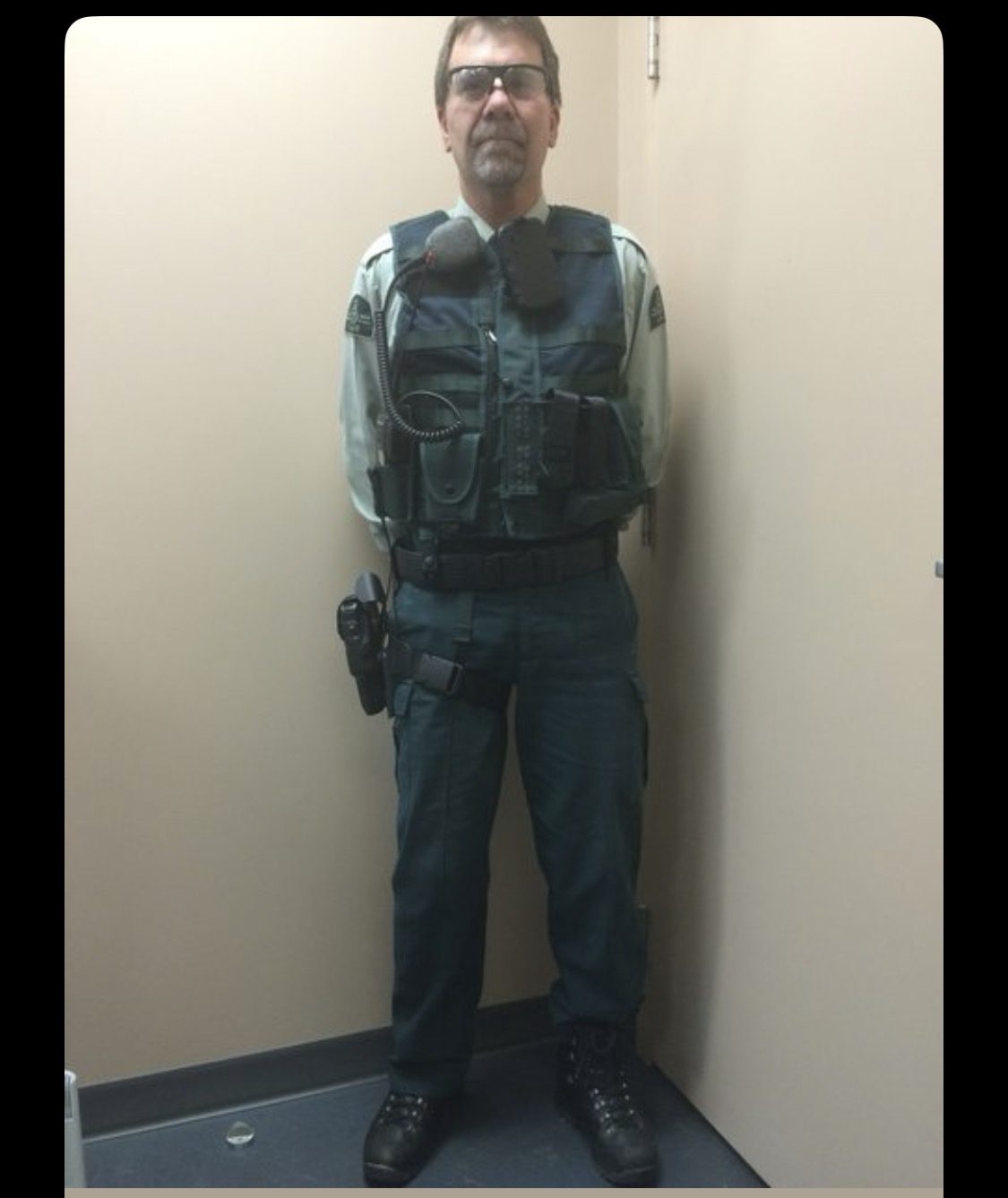
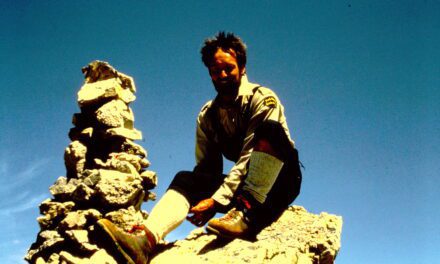
Terry Willis in his law enforcement uniform
LP: Do you have a story or example of this, when you had a situation where Ottawa was pulling you one way and parks another?
TW: It’s hard to come up with just one. The park would want us to do something but say we didn’t have the equipment to do it and so you’d ask Ottawa for the equipment, and they would go, ‘we don’t have that in the budget or why do you need that equipment? You shouldn’t be doing that.’ One of the things that came up was that Banff Park (called Banff Field Unit) wanted us to help out with traffic enforcement in wildlife zones (to reduce road kills). Ottawa said, ‘well, no, we don’t want you guys doing that. That’s police work. We don’t want you writing speeding tickets or pulling people over for speeding.’ The RCMP said they were too busy and those roads are park roads. And the park is saying, ‘well, we have all these animals and they’re getting squished on the roads and so we want you to do something about it.’ That was one of the problems that we had. We put in a proposal to Ottawa with the support of the park developed a pilot project to do radar for traffic enforcement. Ottawa didn’t want to do it, but the park said, ‘well, we need them to do it. Why can’t we do it?’ We ended up starting the radar program. We got trained by the RCMP. We got a couple of hand-me-down radar kits from the RCMP.
Ottawa didn’t want us doing traffic enforcement on the Trans Canada, so the park had to designate areas that were wildlife speed zones. For example, if you go up to Lake Minnewanka you’ll see a sign saying highway speed zone or something like that. Those were the areas we could do our traffic enforcement, and now, it’s just part of the regular program. All the warden vehicles now have radar, and the wardens are trained and certified and they do traffic enforcement on those roads. That was one of the ones where Ottawa was hesitant, but the park wanted it and we figured out a way to get it done. Part of the reason why it worked is because my boss was ex-RCMP, but I think he was ex-RCMP who really always wanted to be a warden. He loved horses, he loved all that stuff, so he really went to bat and fought for us. His name was Ken Chatel. He really worked hard for us and he was one of the best bosses I ever had. He was great that way. He had the street cred with Ottawa and the law branch in Ottawa to say, ‘well, OK, if he thinks it’s worth it and there’s a way to do it where we’re not going to be duplicating what the RCMP does.’ Then they should be allowed to do that type of traffic enforcement. As far as I know, it’s still working out.
LP: What did you like the least about being a warden?
TW: I guess the thing that I liked the least and that was the biggest headache is when I was in the coordinator position and I had to do scheduling. Scheduling for 10 or 12 wardens was a nightmare. I’d spend days and days creating and revising the schedule. I’d set up a schedule and then someone would say, ‘well, I can’t do that because now I’m on course or oh, no I can’t do that, I’m on holidays.’ And I’d say, ‘Well, why didn’t you tell me you were on holidays when I did the schedule? The answer was usually ‘Well, I didn’t know’ and so on. It was pretty frustrating but important. That’s what I didn’t want to do, but when you’re supervising all those guys and girls, it’s got to be done. It affects them, so I had to do a good job. Those are people that you want to support. You had to do as best you could. Plus, your boss is saying, ‘how come we have one guy working today? That’s not enough.’ It was like three-dimensional chess.
LP: What are the more memorable events from your warden career?
TW: If you want something that’s in the new age when we were LE wardens – we had a report of someone driving off road, which is against the law, up at Lake Minnewanka, and so I responded in one vehicle, and another pair of wardens (Chloe Marshall and Greg Becic) responded in their vehicle. We had a description of the vehicle and a plate number, and we ended up seeing it going onto the Trans Canada. We pursued it, stopped it and it turns out it was two guys with criminal histories. I think one was wanted, so we arrested them, called for some RCMP backup and immediately saw some drug paraphernalia in the vehicle – that’s why we called for police backup. One was secured in my vehicle; the other guy was in the other warden’s vehicle, and it was fine. The arrests were fine, there was no problem, but when we arrest someone, we handcuff them, search them, and then put them in the back of our vehicles. They’re secured just like in a police car. Then we continued to investigate and wait for the RCMP to arrive. After a while one, guy went unconscious, and so we had to call EMS. EMS paramedics came out to attend to this guy who couldn’t stay awake — turned out he was overdosing on drugs. Since he was under arrest, we couldn’t leave him with the paramedics, so I had to handcuff the guy to the stretcher and go with the paramedics back to Banff. Once in the hospital in Banff, I had to handcuff him to an emergency department bed as he still had to be secure as he was still under arrest. I then had to stay with him in emergency for several hours as he slept it all off. Marshall and Becic took the other one back to detachment where he was put in cells and charged. This is maybe one or two o’clock in the afternoon, the guy in the hospital finally woke up around six or seven at night and then he went crazy in the hospital, so he had to be wrestled back onto the bed, tied down and sedated again. All this time he repeated that ‘I need to talk to my mom.’ I ended up calling his mom and talking to her before letting him talk to his mom. She was so sad that he was in trouble again and, you know, ‘why can’t he get his act together?’ which was kind of interesting and humorous in a kind of sad way. I eventually took him to the RCMP cells later that night.